Bio-Optimised Berberine and Metabolic Health: What 200 mg Reveals About Blood Sugar and Longevity
Recent research on bio-optimised berberine formulations shows measurable metabolic benefits at a 200 mg dose, offering insights into how targeted supplementation may support blood glucose regulation and cardiovascular markers tracked by wearable devices.
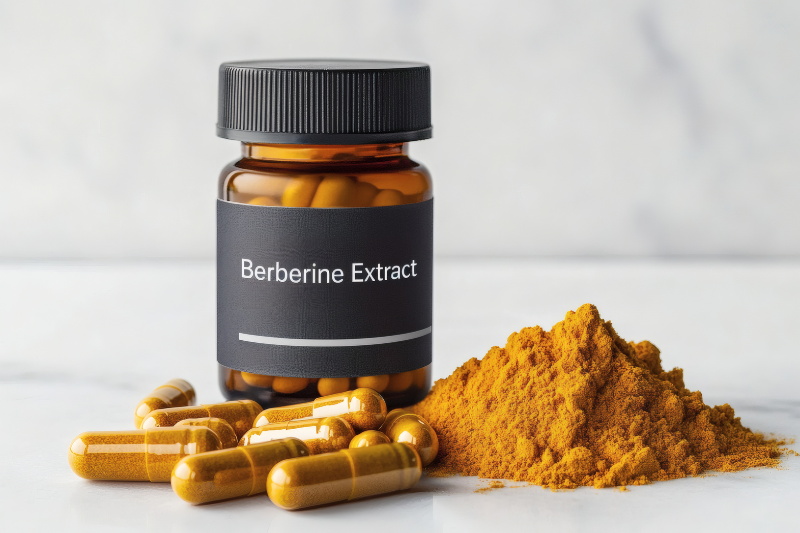
Berberine, a plant alkaloid found in traditional herbal remedies, has long attracted scientific attention for its potential effects on metabolic function. However, the bioavailability of berberine—how much of an oral dose actually reaches your bloodstream—has historically limited its efficacy. Recent developments in formulation technology have produced bio-optimised versions designed to enhance absorption and therapeutic action. A new study examining these improved formulations at a 200 mg dose provides compelling evidence that even modest quantities, when properly formulated, can generate measurable improvements in markers central to metabolic health and longevity.
The research focused on how bio-optimised berberine influences metabolic pathways that affect blood glucose regulation, lipid profiles, and insulin sensitivity. These are not marginal concerns: poor metabolic control accelerates aging, increases cardiovascular risk, and undermines the physiological resilience tracked by wearable health devices. The 200 mg dose represents a practical, achievable supplementation level—neither so large as to risk tolerance issues, nor so small as to be theoretically ineffective. By measuring changes in metabolic markers before and after supplementation, researchers were able to isolate berberine's contribution to systemic health independent of diet or exercise changes alone.
The findings suggest that bio-optimised berberine at 200 mg can support several key metabolic outcomes. Users of longevity-focused wearables often monitor resting heart rate variability, blood oxygen saturation, and inferred metabolic stress as proxies for overall health trajectory. Improvements in glucose metabolism and lipid handling directly influence these measures: better insulin sensitivity reduces chronic inflammatory load, steadies blood sugar fluctuations, and decreases the cardiovascular strain reflected in heart rate patterns. For individuals already tracking these metrics via their devices, berberine supplementation represents one evidence-based lever for optimising the numbers that matter most.
What makes this research relevant to wearable users is the emphasis on dose precision and formulation quality. Not all berberine supplements are equal; standard berberine has poor oral bioavailability (typically 5% or less), meaning most ingested berberine is eliminated before it can exert metabolic effects. Bio-optimised formulations—often using delivery systems such as lipid complexes or proprietary absorption enhancers—can achieve meaningful blood levels at lower doses. The 200 mg figure is therefore significant: it suggests therapeutic benefit is achievable without consuming multiple capsules daily or paying premium prices for extremely high-dose products.
For those using wearables to monitor longevity markers, the practical implication is clear: supplementation quality matters as much as quantity. A 200 mg dose of properly formulated berberine may produce measurable shifts in the metabolic markers your device tracks over weeks to months, whereas the same dose of standard berberine might produce no detectable benefit. This underscores why reading product labels for formulation type (rather than just berberine content) is essential for anyone seeking real-world health gains from supplementation.
Important caveats apply: this research describes one specific bio-optimised formulation at one dose; results may not generalise to all berberine products on the market. Individual response varies based on baseline metabolic health, genetics, concurrent medications, and diet quality. Berberine can interact with certain medications and may cause gastrointestinal side effects in some users. Anyone considering berberine supplementation should consult a healthcare provider, especially those on blood-thinning drugs, diabetes medications, or other chronic therapies. Wearable data should be interpreted as supportive context, not diagnostic confirmation, for any supplement's effects.
Source: Nutraceutical Business Review